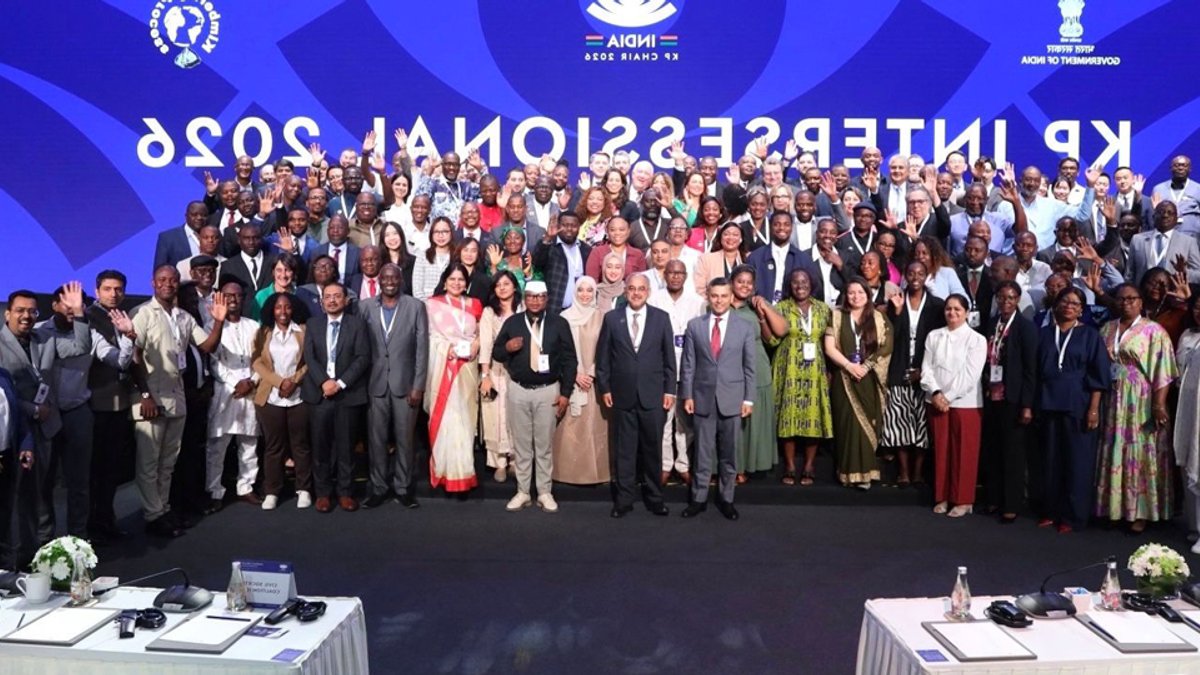
The Kimberley Process Intersessional 2026 wrapped up in Mumbai after four days of talks that brought together government delegates, industry representatives, civil‑society groups and observers to discuss the future of the natural diamond trade.
India leads the dialogue
Union Minister of Commerce and Industry Piyush Goyal welcomed the conclusion, noting that India is the world’s largest centre for diamond cutting and polishing. He said the country sees the Kimberley Process as essential for keeping natural diamonds a “symbol of trust, responsibility and shared prosperity.”
Goyal added that under India’s chairship the focus will stay on the “3Cs”—Credibility, Compliance and Consumer Confidence, while working with all participants to keep the scheme relevant in a fast‑changing market.
Emphasis on the 3Cs
Chair of the 2026 session, Suchindra Misra, said progress at the Mumbai meeting reflected a shared commitment to a credible and responsive process. He stressed that trust is the foundation of the natural diamond trade and that the scheme must stay a pillar of responsible sourcing.
Discussions covered monitoring systems, technical standards, governance, statistical reporting and artisanal production. Participants aimed to tighten transparency and improve operational mechanisms across the value chain.
Working groups shape the agenda
Working groups and committees spent much of the intersession on detailed technical issues. They examined how to better capture data on diamond flows and how to support small‑scale miners while preventing conflict stones.
One outcome was a call for stronger communication with end‑consumers, highlighting the positive impact of responsible sourcing on livelihoods in producing nations. The meeting also noted that the tripartite, consensus‑based structure of the Kimberley Process remains a key strength.
The meeting was, in a word, sprawling. It produced a set of recommendations that will be taken to the plenary in New Delhi later this year, where the 3Cs will continue to guide the agenda through the rest of 2026.
Compared with earlier intersessionals, this gathering placed more weight on consumer outreach, reflecting a broader shift in the industry toward brand‑level transparency. That mirrors a pattern seen in other commodity sectors where end‑user confidence has become a strategic focus.
Next steps and broader context
The upcoming plenary in New Delhi will build on the Mumbai discussions, keeping credibility, compliance and consumer confidence at the forefront. Organisers expect continued participation from the World Diamond Council, civil‑society coalitions and industry bodies.
The Kimberley Process Certification Scheme was established under United Nations General Assembly Resolution 55/56 of 2000 to block conflict diamonds from legitimate trade. Its mandate remains to promote responsible sourcing throughout the natural diamond supply chain.
India reiterated its pledge to uphold the scheme’s objectives, emphasizing transparency, sustainability and responsible practices as the sector moves forward.


