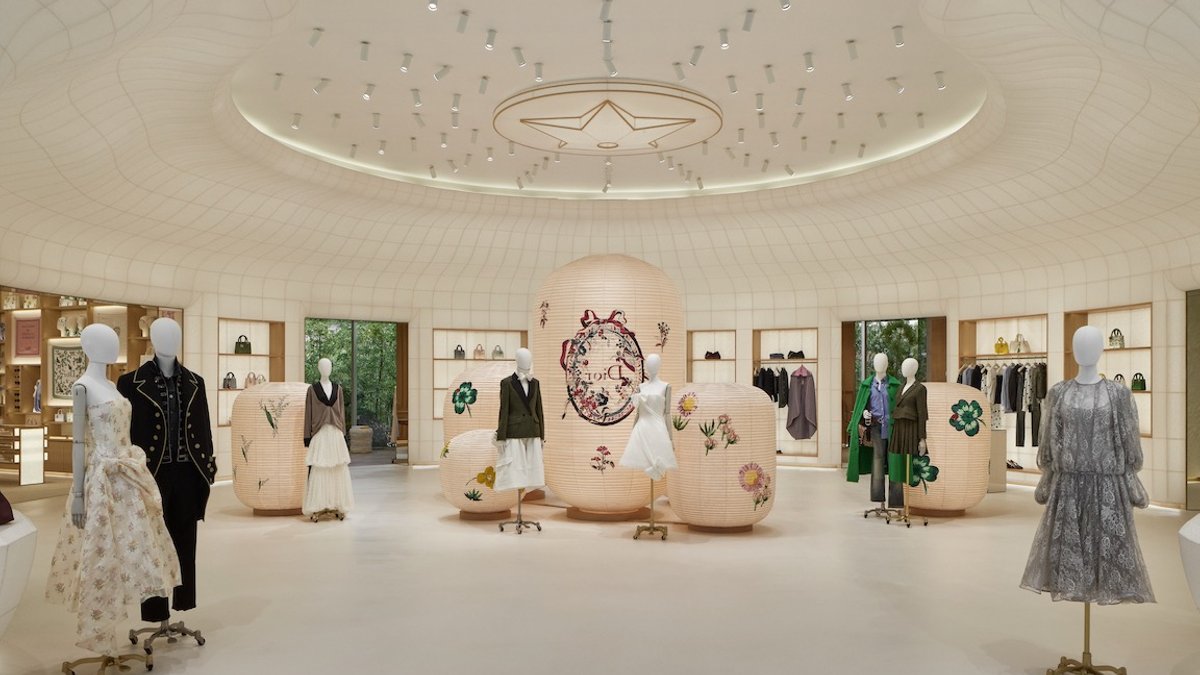
Palace Hotel Tokyo has turned luxury travel into a curated experience by partnering with Dior for a stay package tied to the brand’s new Bamboo Pavilion in Tokyo’s Daikanyama neighborhood. The pavilion itself is a blend of Parisian elegance and Japanese craftsmanship, with a golden aluminum façade mimicking bamboo forests, a conceptual garden by environment designer Seijun Nishihata, and interiors that merge modern French design with traditional Japanese techniques. Inside, creative director Jonathan Anderson’s latest collections are on display, including limited-edition pieces. The hotel’s “A Touch of Dior” package lets guests spend a night immersed in this world. Options include rooms like the Club Deluxe with Balcony, Executive Suite, or Premier Suite.
The experience includes a private tour of the pavilion with a one-way transfer from the hotel, a light meal at Café Dior by French chef Anne-Sophie Pic, a Miss Dior cocktail at either Lounge Bar Privé or The Palace Lounge, and in-room touches like a floral arrangement, a box of Les Bonbons Bouton de Christian Dior chocolates, and a bottle of champagne. The package is available through March 2027, with just one booking allowed per day.
The hotel holds Michelin Guide’s Three Keys, a distinction that signals its reputation for excellence. The collaboration with Dior isn’t just about selling products—it’s about creating an atmosphere where fashion and place intersect. The pavilion’s design, for instance, plays with light and material in ways that feel distinctly Japanese while staying rooted in Dior’s aesthetic. Guests aren’t just visiting a store; they’re stepping into a carefully staged moment where luxury and local culture meet.
Fermentation and wellness in Hokkaido
Otaru Retreat by Onko Chishin in Hokkaido’s Asarigawa Onsen district offers a different kind of immersion, one rooted in kamosu, the Japanese philosophy of fermentation and gradual transformation. The retreat, which reopened in February 2026, now includes two new wellness packages: an Enzyme Bath Package and a Private Onsen Package.
Read Also: Switzerland: The Ultimate Winter Wonderland For The Well-Travelled
Both are designed to align with the property’s core concept, where wellness, cuisine, and design all reflect the slow, intentional processes of fermentation. The Enzyme Bath Package features Hokkaido’s first in-property enzyme bath, developed with Ohtaka Enzyme, a local fermentation house with over a century of expertise. Guests soak in a bath infused with fermented botanical extracts and conifer sawdust, which generates natural heat through microbial activity.
The treatment is marketed for circulation, recovery, and skin renewal, and comes with skincare amenities from the same fermentation house. The experience taps into a growing global interest in wellness rituals that feel both scientific and traditional. Meanwhile, the Private Onsen Package centers on an outdoor bath fed by the Asarigawa hot spring, set against a backdrop of Hokkaido’s wooded satoyama environment. The package includes a sauna infused with kumazasa (bear bamboo), a cold plunge, and a minibar stocked with locally fermented drinks and herbal teas. The design of the bath itself—secluded, natural, and tied to the surrounding environment—reflects the retreat’s broader philosophy. It’s not just relaxation; it’s a return to processes that feel ancient yet precisely modern.
The retreat’s focus on fermentation as a wellness tool is unusual in Japan, where onsen culture has long been tied to mineral-rich waters rather than microbial activity. Yet the approach makes sense in a region like Hokkaido, where fermentation is deeply embedded in local food traditions, from miso to sake. The enzyme bath isn’t just a trend; it’s a logical extension of how Hokkaido’s culinary identity has influenced broader Japanese culture. For guests, the experience offers a way to engage with wellness through a lens that’s both scientific and deeply tied to place.
Calligraphy residency at Osaka hotel
Zentis Osaka is bringing another layer of Japanese tradition to hotel stays with its Art-in-Residence program, now in its third edition. This year’s collaboration centers on shodō, the Japanese art of calligraphy, with input from master calligraphers Baikei Uehira and his son Taiga Uehira. The hotel has installed an exhibition of 11 original works by the duo throughout its public spaces, blending contemporary interpretations with a tradition dating back over a millennium.
Baikei Uehira is a pioneer of live-calligraphy performances and founder of the Seisho Calligraphy Association, while Taiga Uehira runs Calligraphia Japan, aiming to introduce the art form to international audiences. The accompanying stay package, “The Essence of Shodō at Zentis Osaka”, includes two nights’ accommodation, a private 60-minute calligraphy lesson led by either Baikei or Taiga, and a water-calligraphy set for guests to take home.
Read Also: Spring-Inspired Pink and Green Watches Debut
They’ll also receive a traditional Japanese fan featuring their own calligraphy or a piece created by their instructor, along with bath salts scented with Parfum Satori’s signature fragrance. The package runs from June 1, 2026, to March 31, 2027, offering a rare chance to engage with the art form beyond passive observation. What sets this program apart is its balance between preservation and innovation.
The Uehiras’ work doesn’t just replicate traditional calligraphy; it reimagines it for modern audiences. The hotel’s role in hosting the exhibition and lessons ensures that guests leave with both a physical memento and a deeper understanding of the practice. For travelers, it’s an opportunity to connect with a cultural tradition that’s often overlooked in favor of more commercialized Japanese experiences. The package doesn’t just sell a stay—it sells a moment of quiet, deliberate creation.
The three experiences reflect a broader shift in how hotels in Japan are positioning themselves. They’re no longer just places to sleep; they’re platforms for cultural engagement, whether through fashion, wellness, or art. Each package is designed to feel exclusive, not just in terms of cost but in the way it curates access to something uniquely Japanese. The Dior collaboration, the fermentation-focused retreat, and the calligraphy residency all share a common thread: they turn a hotel visit into an opportunity to participate in a tradition, however briefly.
Why hotels are becoming cultural hubs
For travelers, the appeal lies in the specificity. These aren’t generic luxury stays; they’re tailored to niche interests, whether it’s the intersection of French and Japanese design, the science of fermentation, or the meditative act of writing with a brush. The packages succeed because they don’t just offer comfort, they offer context. Guests leave with more than memories; they leave with a sense of having briefly belonged to something larger.


